Healed Arm Sleeves
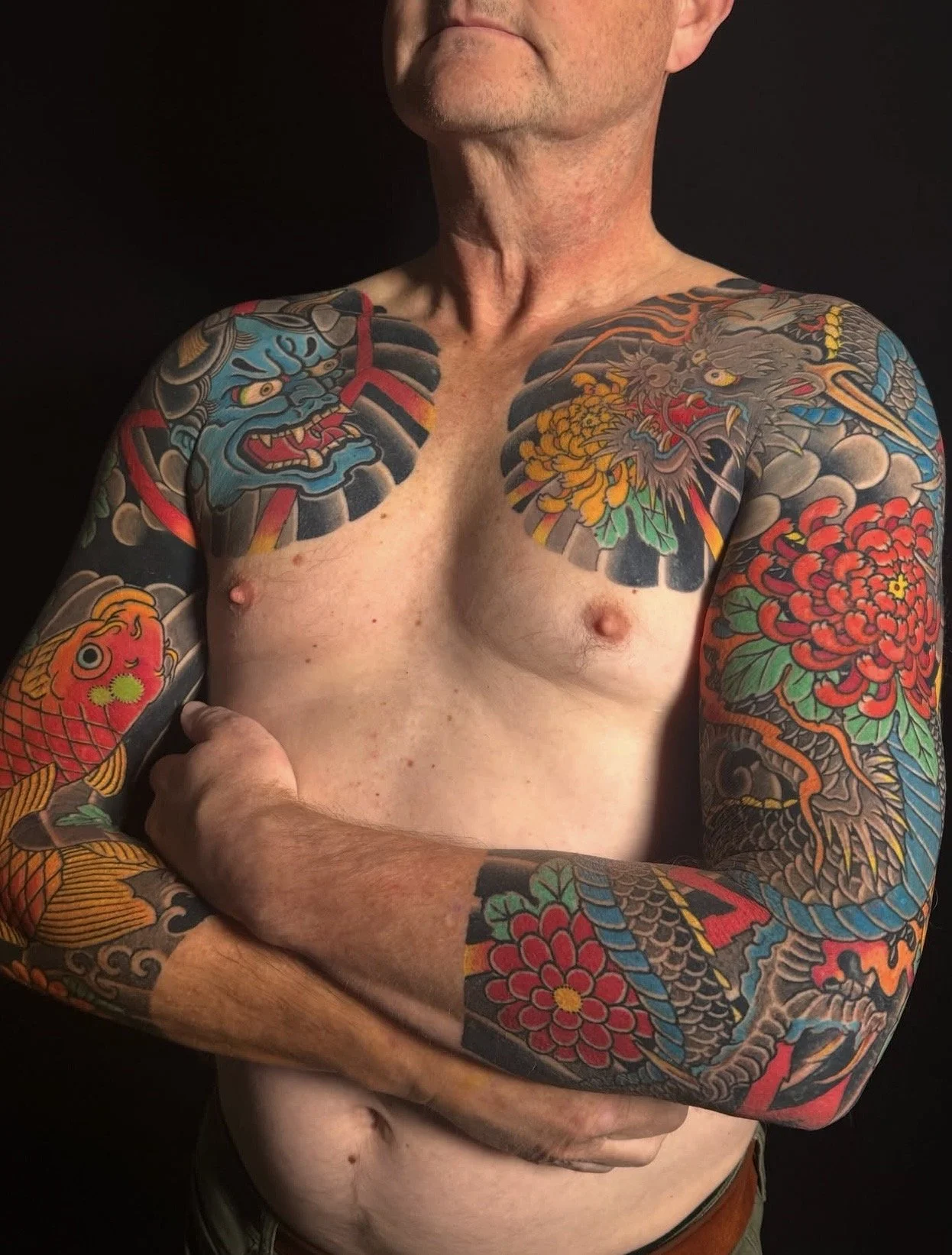
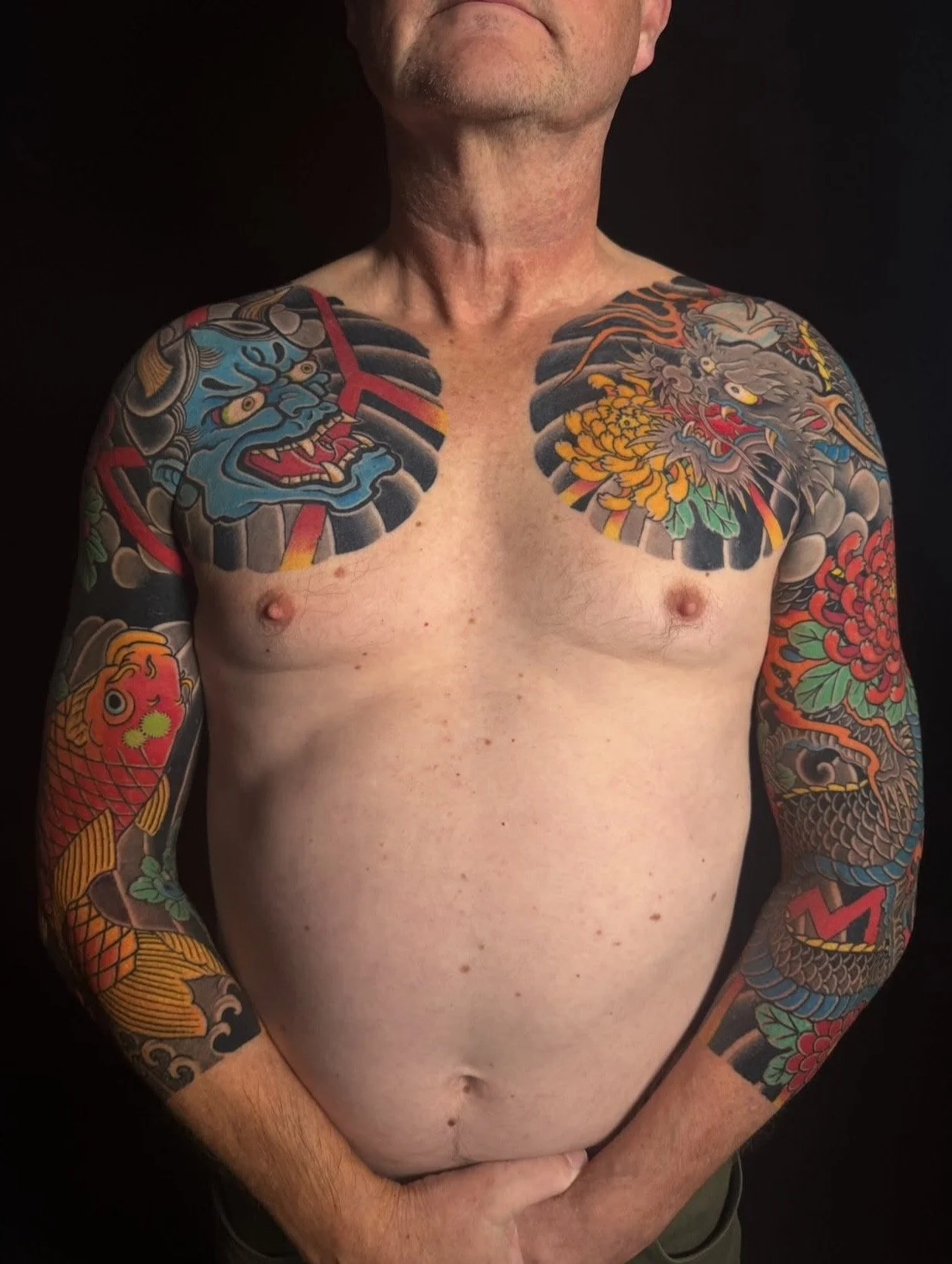
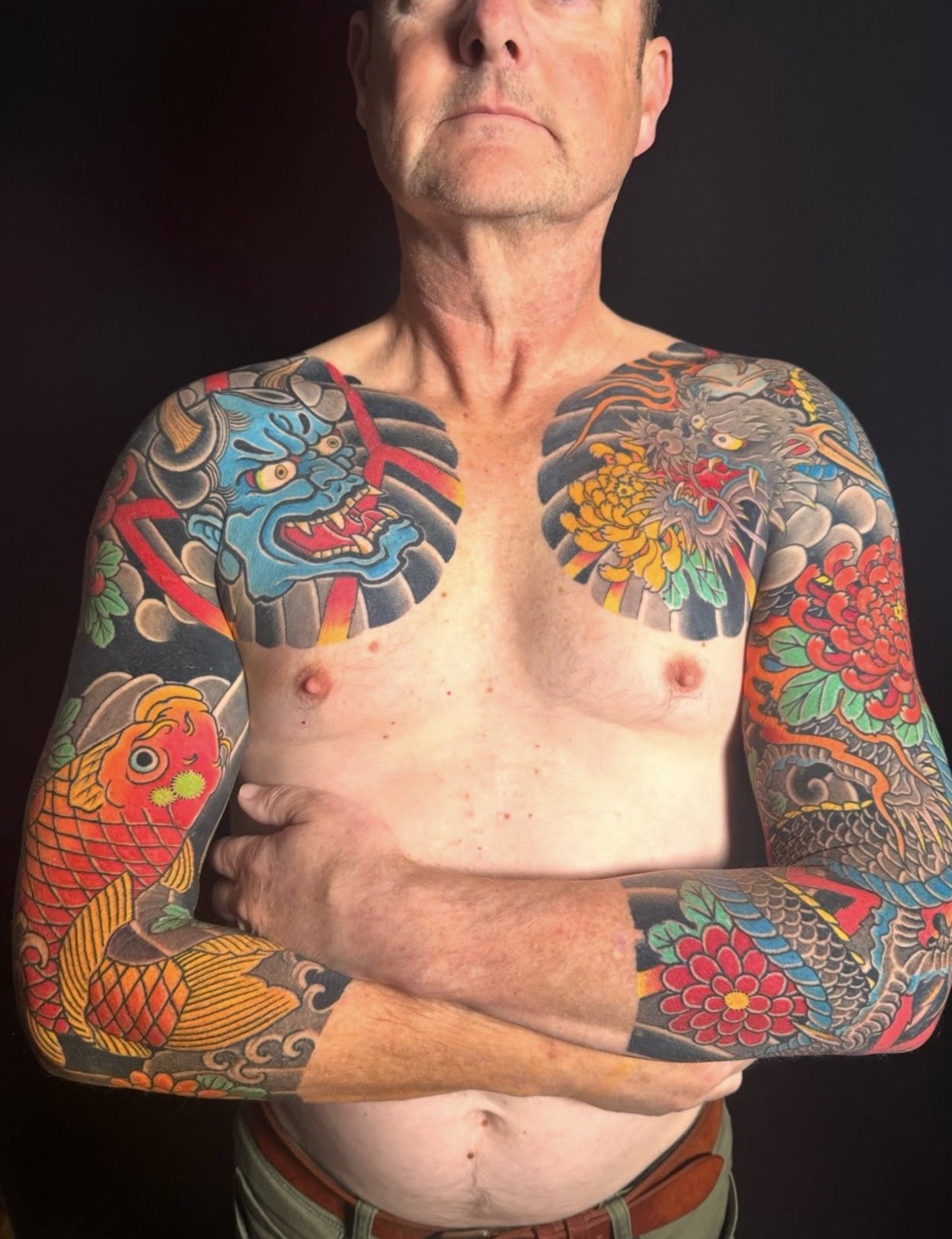
Some of the best moments in this studio don't happen on the tattoo table, they happen months later, when a client walks back in and the work has finally settled into the skin. That's exactly what we're celebrating with this set of photos: two full sleeves, taken from chest to wrist, completely healed and sitting exactly where they should.
The left sleeve pairs a Hannya mask on the chest and shoulder with a koi swimming up the forearm. In Japanese folklore, the Hannya is the mask of a woman transformed by rage and heartbreak into a demon; her horns, gilded fangs, and wide, furious eyes are classic hallmarks of Noh theatre, where the mask represents jealousy, sorrow, and the darker side of love.
Beneath the Hannya, the koi carries an entirely different energy. Koi are symbols of perseverance and strength, tied to the old story of a carp swimming against the current until it becomes a dragon. Paired together on one arm, the Hannya and the koi tell a quiet story of struggle and resilience sitting side by side, one figure already transformed, the other still making her way upstream.
The right sleeve is anchored by a dragon winding from the shoulder down through the bicep, framed by a burst of chrysanthemums in red and gold across the chest and upper arm. Dragons in Japanese tattooing are protective, wise creatures rather than the fire-breathing villains of Western folklore, they're associated with strength, good fortune, and mastery over the elements, particularly water and weather.
The chrysanthemum, or kiku, is one of the most significant flowers in Japanese culture, historically linked to the Imperial family and to ideas of longevity, honour, and rejuvenation. Set against the dragon's scales and clouds, the flowers soften the composition without taking anything away from its power,a reminder that strength and beauty were never meant to be separate ideas in this style of tattooing.
What makes this piece work as a set isn't just the symmetry, it's the way the negative space, the wave and cloud backgrounds, and the colour palette carry across both arms and into the chest panels, so the whole thing reads as one continuous piece of work rather than two separate tattoos. That's the heart of traditional Japanese tattooing: every element supports the next, and the background is never just filler.
Healing is the final test of any large-scale piece. Colours that looked bold on day one need to hold their saturation once the skin settles, lines need to stay crisp, and shading needs to keep its depth. A year or two down the track, this is exactly what that process looks like when it's done right.
If you're considering a full sleeve or a chest-and-arm combination of your own, get in touch, I’m always happy to talk through concept, placement, and how a piece like this is built to age well.